We have chosen our logo to be a symbol of Wabi-Sabi, the Japanese aesthetic which sees the beauty, profundity and authenticity in irregularity and imprecision.
According to Japanese legend, a young man named Sen no Rikyu sought to learn the elaborate set of customs known as the Way of Tea. He went to tea-master Takeno Joo, who tested the younger man by asking him to tend the garden. Rikyu cleaned up debris and raked the ground until it was perfect, then scrutinized the immaculate garden. Before presenting his work to the master, he shook a cherry tree, causing a few flowers to spill randomly onto the ground.
To this day, the Japanese revere Rikyu as one who understood to his very core a deep cultural thread known as wabi-sabi. Emerging in the 15th century as a reaction to the prevailing aesthetic of lavishness, ornamentation, and rich materials, wabi-sabi is the art of finding beauty and profundity in earthiness, of revering authenticity above all. In Japan, the concept is now so deeply ingrained that it’s difficult to explain to Westerners; no direct translation exists.1
Face Equality International campaigns for a global culture which sees the beauty, profundity and authenticity in distinctive and irregular faces and values every single human being equally whatever their face looks like.
The beautiful, meaningful and profound logo symbolically reflects the aesthetic culture we aspire to create.
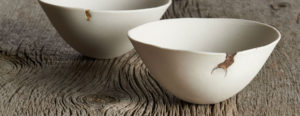
Wabi-Sabi is particularly in evidence in pottery and art:
“While we may be tempted to throw away a broken plate or bowl, ceramics in Japan are mended using resin mixed with powdered gold, silver, or platinum. You can see the visible cracks, but the repaired pieces’ quirky beauty somehow make them even more covetable.
And it’s not just used with things that are broken. Artists in Japan often leave subtle fractures in the glaze when making a vase or bowl as a reminder of the wabi-sabi nature of life.”2
The making of human faces is far subtler and more complex than the making of a vase or a portrait. The judgements we make about them should be too — and not based on out-dated or commercially-inspired stereotypes.
We hope you will enjoy the logo in all its fullness!
References:
- Robyn Griggs Lawrence: https://www.utne.com/mind-and-body/wabi-sabi
- https://thethirty.byrdie.co.uk/wabi-sabi