Sunshine Social Welfare Foundation, who are part of Face Equality International’s global alliance, has released new research exploring the appearance-related experiences of people with facial differences in Taiwan. The 2026 survey gathered responses from 239 people with burn injuries, oral cancer and other facial differences, providing important insight into the challenges many continue to face in everyday life.
Key findings
The findings reveal both the scale of appearance-related discrimination experienced by people with facial differences and the lasting impact it can have on confidence, relationships and future opportunities.
At a glance:
- 65.7% of respondents experienced appearance-related unfriendly treatment.
- 61.9% reported negative impacts on their lives as a result.
- 26.3% said these impacts had lasted for more than 10 years.
- 46.6% said concerns about appearance influence major life and career decisions.
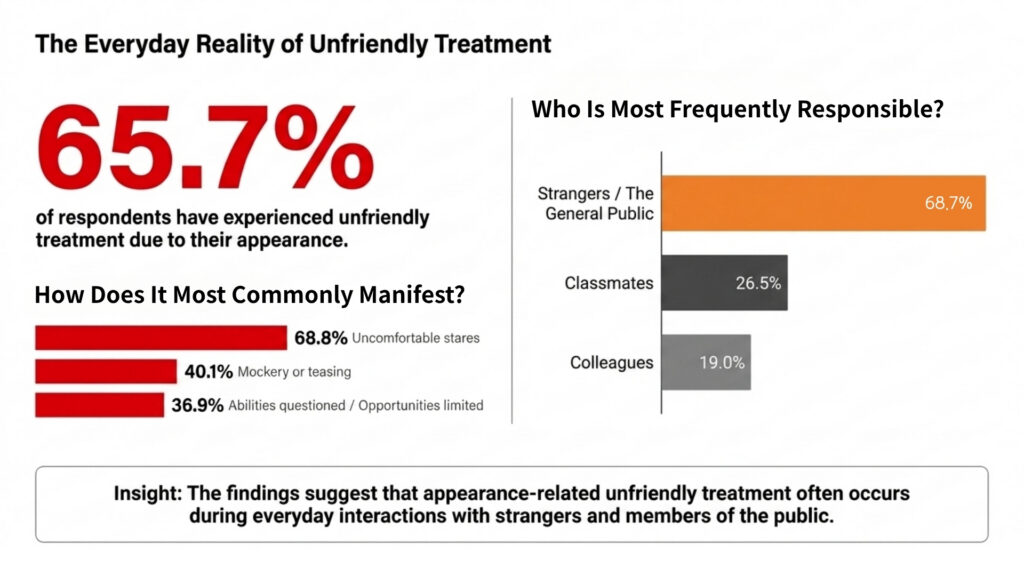
- The most common experiences were uncomfortable staring (68.8%), mockery or teasing (40.1%) and having abilities questioned or opportunities limited (36.9%).
Understanding the everyday reality of appearance-related discrimination
The findings reveal that appearance-related discrimination remains a common reality. Nearly two-thirds (65.7%) of respondents reported experiencing unfriendly treatment because of their appearance. Respondents who had experienced discrimination encountered an average of more than three different types of unfriendly behaviour. The most common experiences were:
- Uncomfortable stares (68.8%)
- Mockery or teasing (40.1%)
- Abilities questioned/opportunities limited (36.9%)
This was significantly higher than the general public where approximately 1 in 5 experienced unfriendly treatment (Sunshine’s 2025 survey).
Where does appearance-related discrimination occur?
The survey found that appearance-related discrimination often occurs during everyday interactions, particularly with strangers and members of the public. In fact, 68.7% of respondents who experienced unfriendly treatment identified strangers or members of the public as the source of these experiences, compared with 26.5% who identified classmates and 19.0% who identified colleagues.
These seemingly routine encounters can have profound and lasting consequences for wellbeing, confidence and social participation.
The long-term impact on confidence, relationships and wellbeing
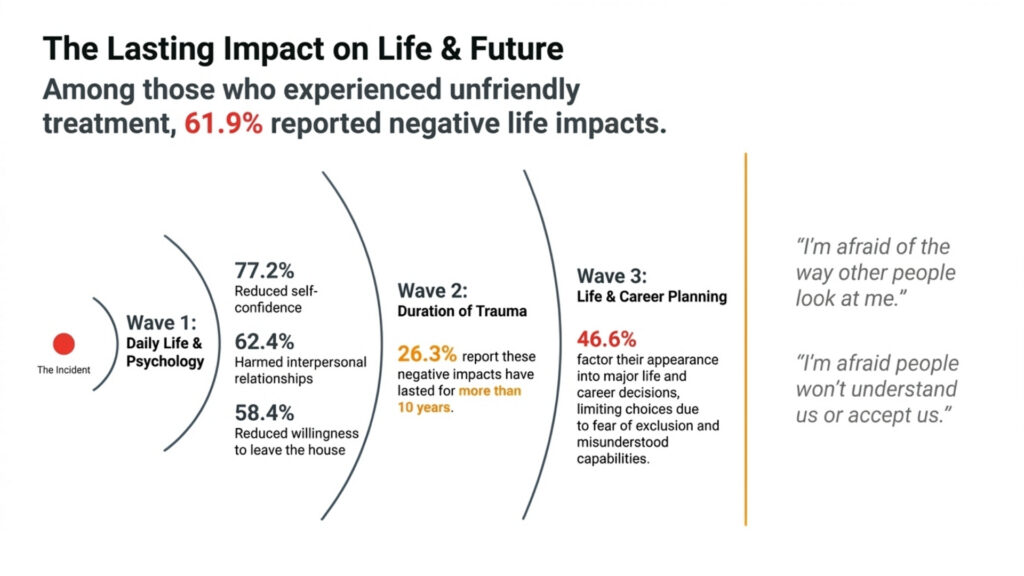
Among those who experienced unfriendly treatment, 61.9% reported negative impacts on their lives, including:
- Reduced self-confidence (77.2%)
- Harmed interpersonal relationships (62.4%)
- Reduced willingness to leave the house (58.4%)
More than one quarter (26.3%) reported that these effects had lasted for more than 10 years.
How appearance-related stigma shapes future opportunities
The research also highlights how appearance-related discrimination can influence future opportunities. Nearly half of respondents (46.6%) said concerns about appearance affect major life and career decisions, reflecting fears of exclusion and assumptions about their abilities.
What young people with facial differences told researchers
The survey also explored the experiences of young people aged 13–17. Half of adolescent respondents reported experiencing appearance-related unfriendly treatment, with most incidents occurring in schools or educational settings and often involving classmates or peers. The findings suggest that appearance-related stigma can affect young people during a critical period for developing confidence, identity and social relationships. They also highlight the importance of creating environments where children and young people can participate without fear of judgement based on appearance.
Building a society where everyone is accepted
In response to the findings, Sunshine is calling for a collective commitment to building a society where people are not judged or defined by how they look. The organisation emphasises the need to challenge narrow beauty standards and create environments where everyone can feel accepted, respected and free to be themselves.
At Face Equality International, we are proud to work alongside Sunshine Social Welfare Foundation and our members around the world to challenge appearance-based discrimination and advance face equality for all. Together, we continue to advocate for a world where people are treated with dignity and respect, without being judged because of how they look.
“When we dismantle the constraints of a singular beauty standard and learn to look at every unique face with an open, ordinary mind, we do more than protect people with facial differences — we create an environment where everyone can feel free to be themselves.” – Sunshine Social Welfare Foundation
Learn more:
Read the Sunshine Survey Report Summary
Download the Research Fact Sheet
Learn more about Sunshine Social Welfare Foundation
Read our Taiwan country profile featuring Sunshine Social Welfare Foundation
Tags: Face Equality, facial difference, research, Taiwan Posted by